ServicesReverse Osmosis
Reverse Osmosis Systems in Pasadena, TX
Our under-sink reverse osmosis systems give your kitchen its own small faucet for drinking and cooking water that tastes clean and clear. We match the equipment to your water and your cabinet, install it with care, and look after it for years once the work is finished.
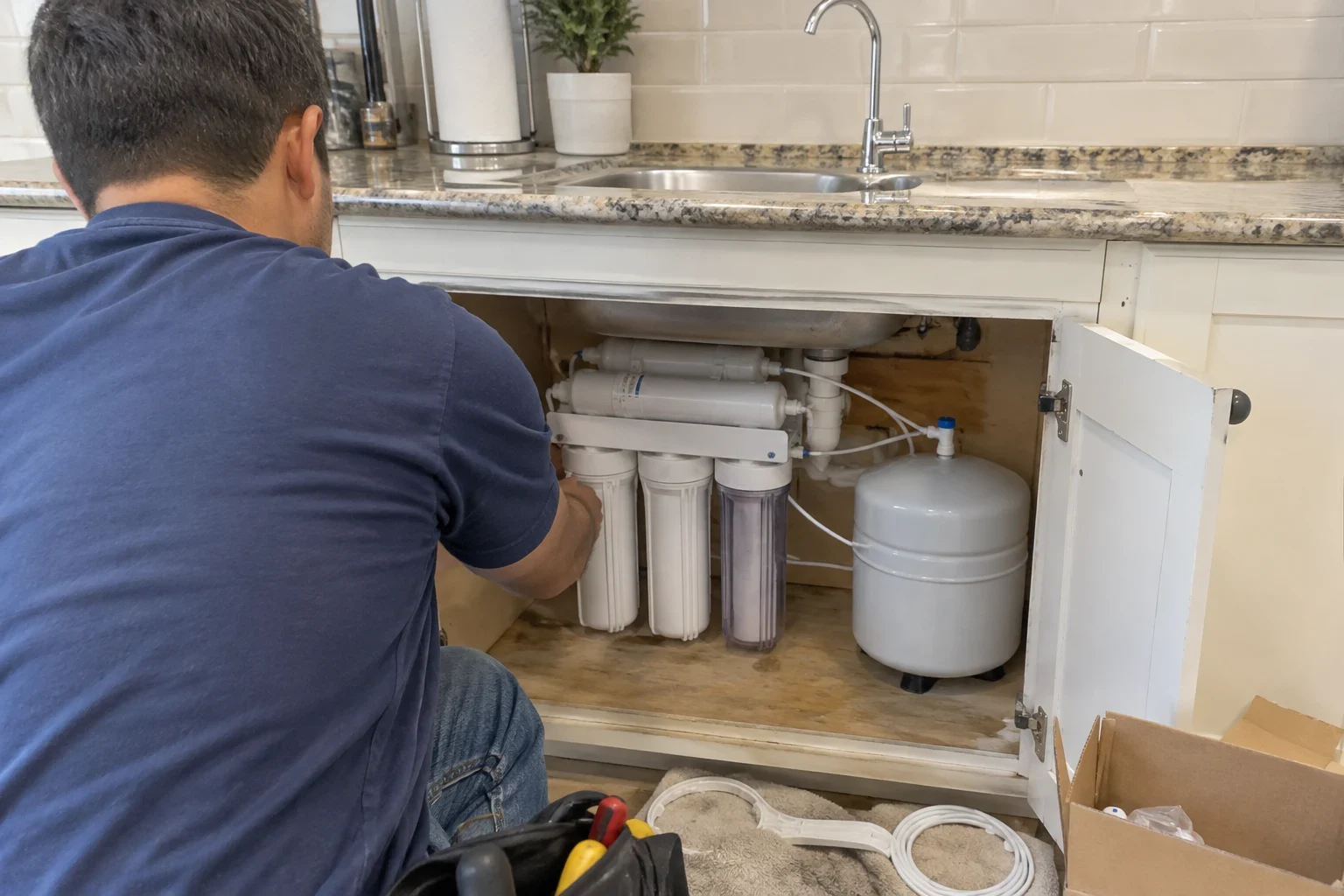
How reverse osmosis works in your kitchen
Water is pressed through an extremely tight membrane that lets water molecules pass while turning away most dissolved minerals, lead picked up from aging pipes, and many of the compounds behind odd tastes and smells. A carbon filter ahead of the membrane strips chlorine, and a final polishing filter rounds off the flavor. Filtered water then flows from a slim faucet next to your main one, ready for coffee, ice, cooking and a cold glass.
This is the best choice when the water you drink and cook with is the main concern. When the trouble is chlorine in the shower or spotting on every fixture in the house, whole-home filtration or a water softener is often the better fit, and we will tell you that honestly when we talk.
Running costs matter too. Households that give up cases and jugs of bottled water usually watch that expense disappear from the weekly shop, and most standard systems draw no electricity. We also favor parts that reduce the water rinsed down the drain wherever your setup allows.
What your installation includes
- Equipment chosen for your water
- Pre-filters and membrane are selected around what your supply actually carries, rather than pulled from a generic box. If your water has never been checked, our water testing service is a good place to begin.
- Free installation
- Installation comes free with your system. We mount the unit, tie into the cold supply and drain, and set the faucet.
- A faucet that looks at home
- Where we can, the dedicated faucet goes into an unused sprayer or soap opening. If there is none, we bore the countertop slowly and cleanly, and you choose a finish that sits well beside your main fixture.
- Components that waste less
- A permeate pump or high-efficiency membrane lowers the rinse water headed for the drain and refills the tank more quickly. We lay out the pros and cons before anything is ordered.
- Fridge and ice maker hookups
- On request, we route a line to your refrigerator dispenser or ice maker so drinks and cubes share the same filtered water.
- Full services after the sale
- Full services after the sale covers filter replacements, membrane checks and a real person to help if the water ever tastes or flows differently. Our care continues well past installation day.
When a reverse osmosis system is worth it
Bottled water is a weekly habit
Hauling cases home is tiring, fills the recycling bin and adds up at the register. Once the kitchen tap tastes just as good, most people stop buying them.
Coffee tastes like the pool
Chlorine protects the public supply but can leave a sharp note in coffee and tea. The carbon stage removes it before water reaches the membrane.
Older pipes or solder in your home
Aging plumbing can add lead at the faucet even when the water leaving the utility is clean. Reverse osmosis ranks among the most reliable ways to cut lead right where you drink.
Cloudy or off-tasting ice
Long, hot summers mean plenty of ice. Feeding the ice maker with filtered water makes clearer cubes without the stale aftertaste.
High TDS on a recent test
When lab results show a large amount of total dissolved solids, a reverse osmosis membrane is built to reduce exactly that.
What moves the price of a reverse osmosis system
Because installation is free, your cost is mostly the equipment itself plus any added work your kitchen calls for. On the call we walk through every component and the reason for it, so the parts list holds no surprises. Choices that save water or cabinet space sometimes cost a little more up front and less over the years.
Storage tank or tankless
A conventional unit keeps a few gallons of filtered water ready in a compact tank. Tankless designs free up cabinet room and usually send less water to the drain, though the hardware is priced higher.
How many filter stages
Added sediment pre-filters for gritty supply, or a mineral stage that returns a little calcium and magnesium for flavor, change what goes into the system.
Your countertop and faucet choice
Using a spare sprayer or soap hole keeps the job simple. Boring through granite or quartz, or picking a finer faucet finish, adds to it.
Lines to the fridge or ice maker
Feeding a refrigerator takes extra tubing and fittings, and occasionally a longer route through neighboring cabinets.
How the work goes
- 1
A conversation by phone
We ask about your water, your household and your sink. You get a clear picture of what system fits and what it involves before anyone visits.
- 2
A look at the space
We check the cabinet under your sink for room, the cold supply valve, the drain line and the countertop material. Granite and quartz are drilled with the right bit and a slow, careful hand.
- 3
Installation day
We shut off the cold supply, lay a protective mat in the cabinet and mount the unit so it stays clear of your stored items. Then we connect the drain, fit the faucet and tank, and pressurize the system.
- 4
Flush, check and clean up
New filters and the membrane are flushed before you drink from them. We check every fitting for leaks, show you how the system works, and leave your kitchen as we found it.
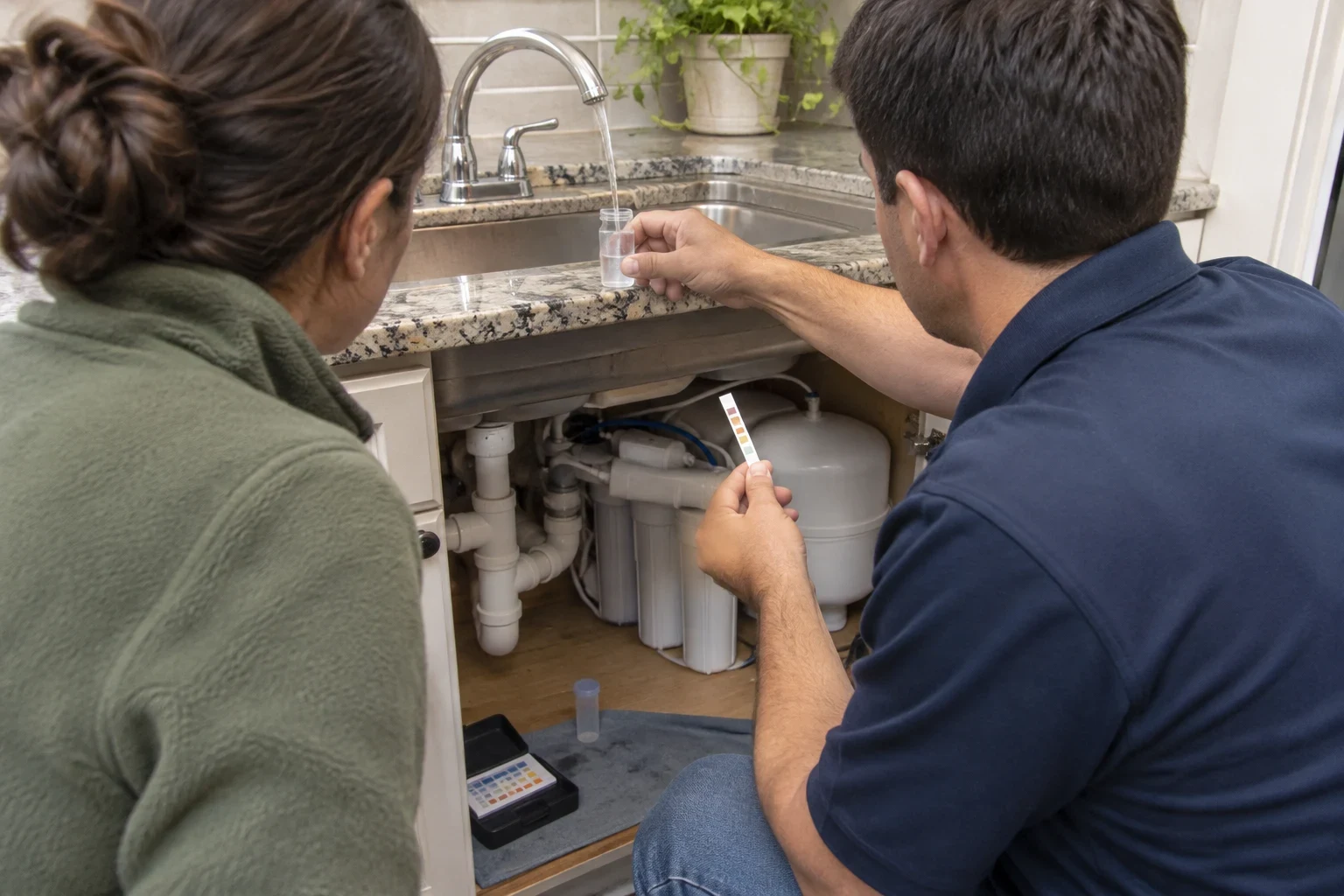
Common questions about reverse osmosis
How much water goes down the drain?
A membrane needs a steady rinse to stay clear, so part of the incoming water carries the rejected minerals away. Older units were wasteful in this respect. Current high-efficiency membranes and an optional permeate pump reduce that rinse water considerably, and we configure your system to be as frugal as your cabinet and budget allow.
Does RO water taste flat?
Water this clean can taste a little thin to some people. We can add a mineral cartridge after the membrane that lets the water pick up a touch of calcium and magnesium again, which gives it a rounder, gentler taste. If higher pH water interests you, our alkaline water systems page explains that option.
How often are filters replaced?
The pre-filters and final polishing filter generally get changed about once a year. The membrane lasts longer, depending on your water and how much your household draws. As part of our full services after the sale, we keep the schedule and do the changes for you.
Is there room under my sink?
Most kitchen cabinets have enough space, garbage disposal included. Where room is tight, a tankless unit is often the answer. We look at the cabinet before suggesting any system.
Do I need an outlet under the sink?
Standard tank systems run on household water pressure with no electricity at all. Certain tankless models and booster pumps do need power, and we will tell you before you choose one.
Clean drinking water, right beside your main faucet
Share a little about your kitchen and how much water your household drinks and cooks with, and we will recommend a setup that suits it. We work in Pasadena and nearby towns such as Deer Park and La Porte.