ServicesWhole-Home Filtration
Whole-Home Water Filtration in Pasadena, TX
One system on your main water line filters every tap, shower and appliance in your home. We size the media tank to your household and pressure, so you get softer-feeling showers without a chlorine smell, and less sediment working its way into your water heater.
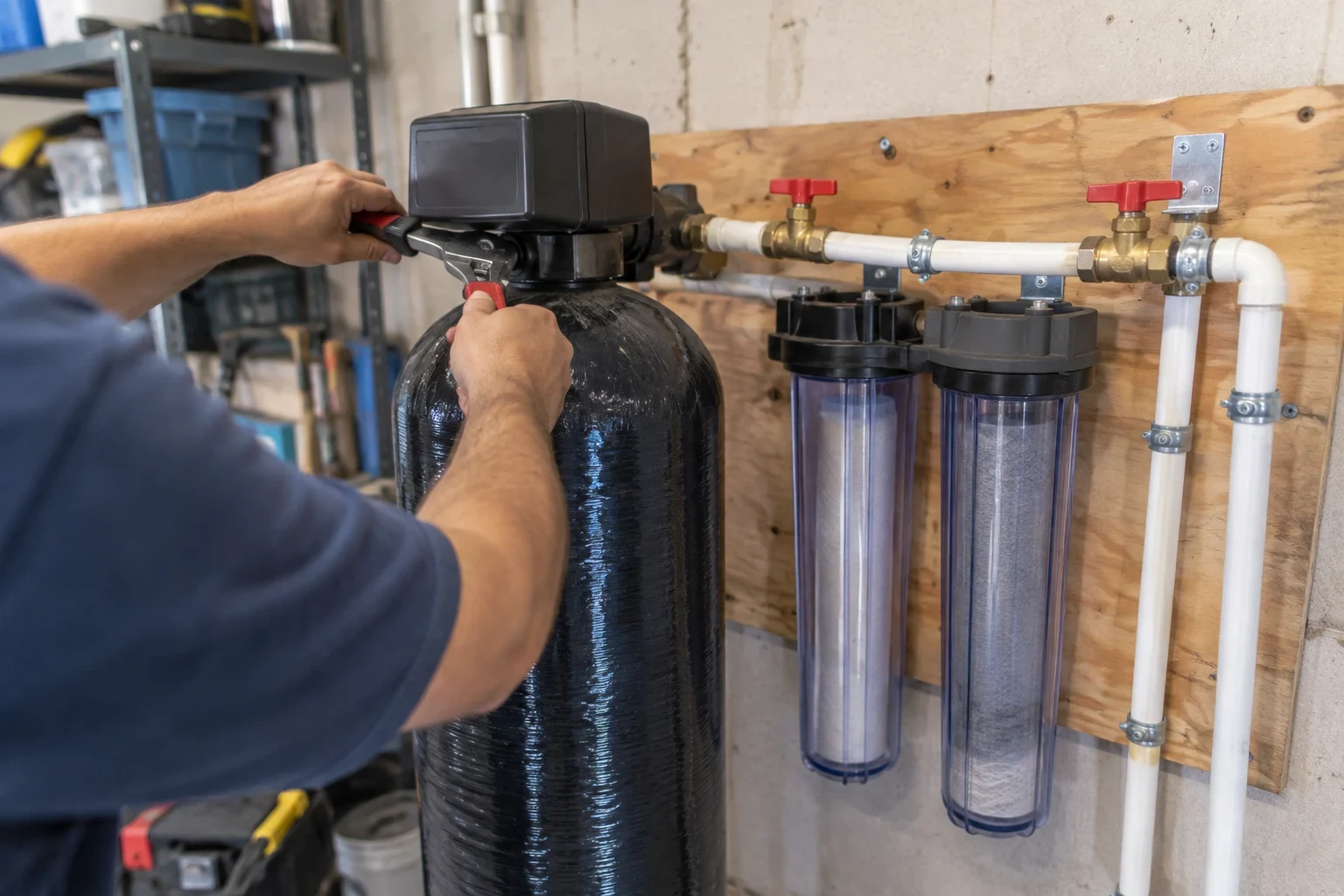
What a whole-home system does
This kind of system is installed at the point where your main supply line comes into the house, often beside an outdoor hose bib or close to the water heater. Water first moves through a sediment stage that traps sand and rust flakes, then through a tank of activated carbon that pulls out chlorine along with its taste and smell. Every fixture past that point gets filtered water, from the kitchen and baths to the laundry and the water heater.
It makes sense when the issue shows up all over the house, not just in a drinking glass. A pool-like smell in the shower, skin that feels tight after bathing or a film on the tub all point to treating at the point of entry. If drinking water is the only thing on your mind, our reverse osmosis page may suit you better, and plenty of homes use both.
The savings on running costs are real, though modest. With less sediment reaching the water heater, it keeps its efficiency longer, and faucet cartridges and appliance valves stay cleaner. We will be straight with you about what a system can and cannot change.
What the work includes
Understanding your water first
Before we suggest any equipment, we find out what is really in your water. When hardness or iron turns out to be the issue, we tell you, and steer you toward water testing or water softeners instead of carbon that would not solve it.
Sized for flow, not just price
A tank that is too small starves the showers when two run at once. We pick the tank and control valve for your bathroom count and busiest hours, so pressure feels unchanged and the water simply feels cleaner.
A sediment stage up front
A cartridge or backwashing prefilter shields the carbon bed and traps the fine grit that would otherwise collect in faucet aerators and the bottom of your water heater.
Carbon matched to your supply
Standard activated carbon is excellent at removing chlorine. If your utility disinfects with chloramine, catalytic carbon performs better, and we select the media accordingly.
A neat, serviceable install
We fit shutoff and bypass valves so the system can be maintained while the rest of the house keeps running, route the piping cleanly and leave the area as we found it. Our current offer includes free installation.
Support once it is running
Our full services after the sale cover filter changes, valve checks and a quick answer whenever the water seems different.
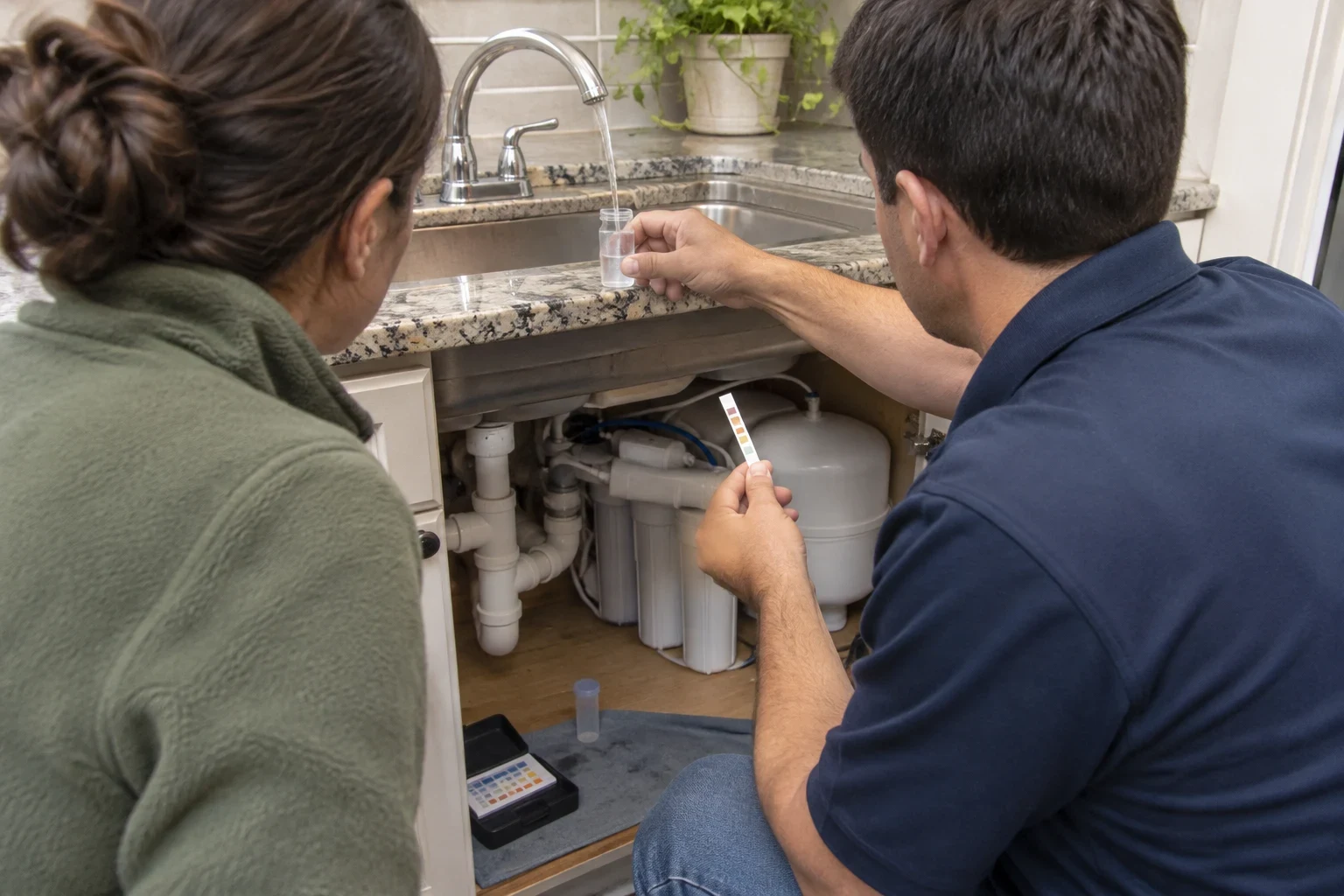
Signs your home could use whole-home filtration
- Bathroom steam that smells like a pool
- Hot water releases chlorine into the air, so the smell gathers in a closed bathroom. Treating water where it enters the house removes the chlorine well before your shower ever sees it.
- Tight skin or dull hair after a shower
- Many people notice their skin feels more comfortable and their hair looks softer once chlorine is no longer in their bath and shower water.
- Grit in aerators and showerheads
- Specks collecting in faucet screens tell you sediment is moving through your pipes. The same particles sink to the bottom of your water heater.
- Too many filters to keep track of
- Swapping a fridge cartridge, a shower filter and pitcher refills on three different schedules suggests one system at the point of entry could cover all of them.
- Coffee and tea that taste off
- Chlorine ends up in anything made with tap water, even the ice in your glass.
From first conversation to filtered water
- 1
A conversation by phone
Tell us what you have been noticing in your water and a bit about your plumbing. We talk it over and decide together whether whole-home filtration fits, or whether another approach would serve your home better.
- 2
Sizing and a clear recommendation
We look at your water, how many bathrooms you have and where the main line enters. Then we explain the tank size, media and placement we suggest, and why each choice makes sense.
- 3
The day of installation
Most jobs fill part of a day. We protect the floors, shut the water off briefly, plumb the system in with a bypass valve and flush the new media until the water comes through clear.
- 4
Handover and care afterward
Before leaving, we show you the bypass, the filter housing and what routine upkeep looks like. From then on, our service stays available for as long as you own the system.
What shapes the price
The total comes down to the equipment your home needs and how much work it takes to reach the main line. We break the recommendation into its parts so you can see what each piece does and why it is there. Nothing gets added that your water does not call for.
- Bathrooms and peak demand
- A home where three showers and the washer can run together needs a bigger tank and valve than a two-bath house. Matching that capacity is what keeps pressure steady.
- The carbon you need
- Catalytic carbon, used for chloramine, is priced above standard activated carbon. We specify it only when your water supply makes it worth having.
- Access to the main line
- A supply line that comes up beside an outdoor hose bib or in the garage is simple to tie into. A slab entry or a cramped utility closet means more pipe and more labor.
- Pairing with other equipment
- Adding a softener or a reverse osmosis unit for the kitchen widens the job, so we price the full setup together.
Common questions about whole-home filtration
- Will my showers lose pressure once the system is in?
- They should feel the same when the equipment is sized properly. When people do notice a drop, the cause is usually a tank that is undersized for the house or a sediment cartridge left in too long. We plan around the heaviest demand your home sees in a day, which keeps both of those from becoming an issue.
- Does it soften my water?
- No. The carbon removes chlorine and the taste and odor that come with it, while the sediment stage catches particles. Calcium and magnesium move through both untouched. If a hardness test shows they are worth treating, we can talk through water softeners with you.
- How often does the media need changing?
- The sediment cartridge is the part you will replace most, typically every few months and more often if your supply carries extra grit. The carbon bed lasts much longer, and its timing depends on how much water your household uses and how large the tank is. We set a schedule around your actual usage.
- Can it help my water heater run more efficiently?
- It helps the heater keep the efficiency it already has. Sediment settling on the bottom of the tank acts as a barrier between the burner or element and the water, so keeping it out means less energy lost over the years. Hard water scale is a different matter, and a softener is the tool for that.
- Is my tap water safe to drink without a filter?
- Public water must meet federal drinking water standards, and a whole-home system is mainly about taste, odor and how the shower feels. If you want an extra layer on the water you drink and cook with, an under-sink reverse osmosis unit in the kitchen is the common next step.
Ready for better water at every tap
Tell us what you notice in your home and we will recommend a system sized to fit, with installation included and service after the sale.