ServicesWell Water Treatment
Well Water Treatment in Pasadena
On a private well, nobody treats the water before it reaches your tap. We sample it, go over the results in plain language, and fit equipment to the chemistry we actually find, so the water runs clear and your pipes, fixtures and water heater carry a lighter load.
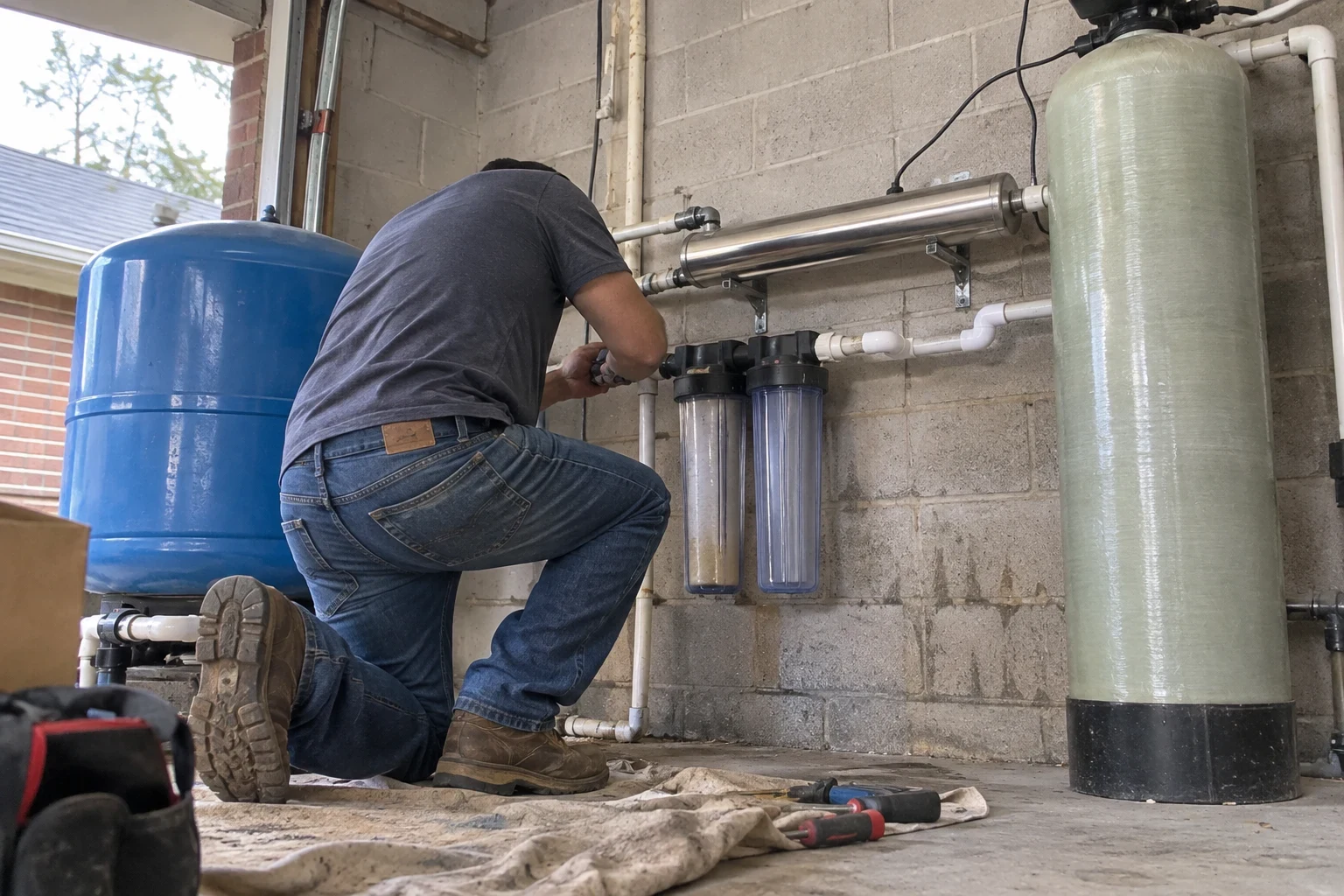
Equipment chosen from your results
No two wells behave quite alike, even a few lots apart. One delivers water tinted with iron, another smells of sulfur, and a third runs crystal clear yet carries bacteria. For that reason we hold off on any recommendation until a test result is on the table.
With the results in hand, we build a system to fit them. It may be a sediment filter followed by an iron filter, a carbon stage for odor, an ultraviolet unit, or several of these together. We place each stage in the sequence the water calls for and add bypass valves, so one component can be serviced while the rest of your home keeps its water.
There is a running-cost benefit too. Iron and scale crust over water heater elements and the insides of fixtures, and a crusted element burns more energy for the same hot water. Clean, balanced water keeps those surfaces clear and your utility costs steady.
What goes into a well treatment install
- Testing comes first
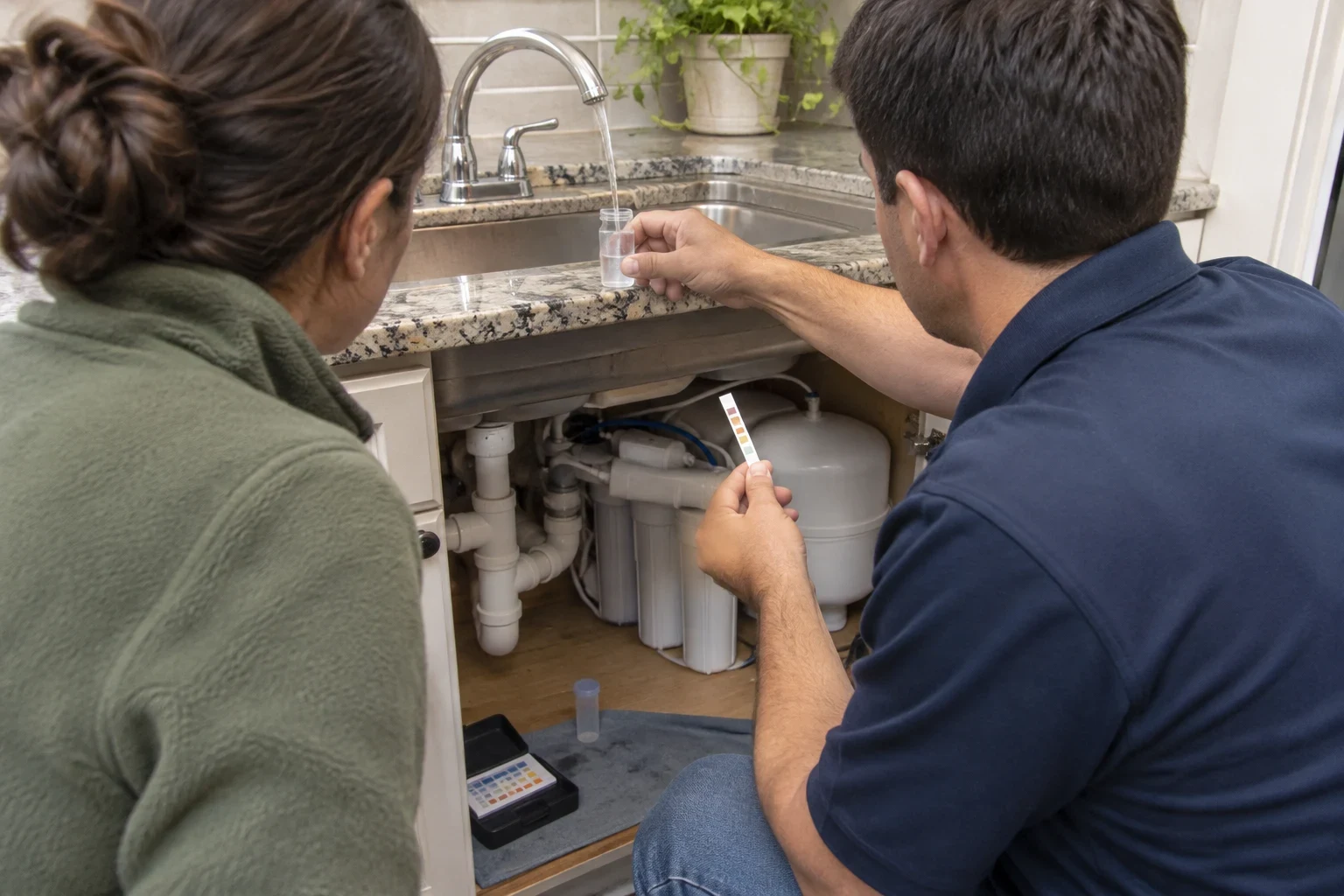
- We look at iron, manganese, hardness, pH, sulfur odor and bacteria. You see every number, and we point out which ones matter for your home and which you can set aside. Our Water Testing page goes into more depth.
- Removing grit and iron
- A sediment stage catches sand before it can clog anything further along. Iron and manganese are then oxidized and filtered out, which ends the staining on sinks, tubs and clothes.
- Clearing odor and off tastes
- Activated carbon pulls out the rotten-egg smell of hydrogen sulfide along with other unpleasant flavors, leaving water with no smell at all.
- UV disinfection where it is needed
- If testing finds coliform bacteria, or the well is shallow or aging, an ultraviolet unit treats all the water passing through it without adding any chemicals.
- A tidy, service-ready layout
- Equipment is mounted level, each valve is labeled, and there is clearance to swap cartridges and lamps easily. Installation is free, and with full services after the sale, you always know who handles filter changes and checkups.
When your well water is asking for treatment
Rust-colored or black marks
Orange rings in the toilet bowl and reddish streaks under faucets usually mean iron. Dark, sooty stains tend to point to manganese.
Water that smells like eggs
That sulfur odor, often worst at the hot tap, comes from hydrogen sulfide or from bacteria living in the water heater.
Sand in screens and aerators
Grit plugs faucet aerators, wears out valve seats and collects at the bottom of the water heater, where it sits between the heat source and the water.
A test that is overdue
Bacteria give no clue by sight, smell or taste. If a year has passed since your last test, or storm water pooled around the wellhead, testing is the right place to start.
A water heater working harder
Longer run times, popping or rumbling usually mean the heater is fighting through scale and sediment. Treated water slows that buildup.
What moves the price of a well system
We price well treatment from your lab results rather than from a fixed package. Two neighbors on similar wells can end up with quite different equipment, and we prefer to show you why than to fit more than your water requires.
The problems on your report
A well with only iron calls for a shorter treatment train. Add sulfur odor or bacteria and each one brings its own stage, its own housing and its own upkeep.
Pump output and daily demand
The system has to match what your pump delivers and what your household draws at its busiest hour. More bathrooms and more people mean larger tanks and wider housings.
The entry point itself
A cramped utility closet, an outdoor pad or aging pipe that has to be replumbed all add time to the install.
Running costs over the years
Cartridges, UV lamps and filter media each wear out on their own schedule. We list them in the estimate so you see the yearly cost of ownership, not only the day-one figure.
How the work goes, start to finish
- 1
A conversation by phone
You tell us about your well, its age if you know it, and what you have noticed. We set a time to sample your water.
- 2
Testing and a written plan
We collect samples and review the results with you. You get a written estimate that lists each component, why it is there, and what upkeep it will need.
- 3
Installation day
We work where your well line enters the house, lay down protection on floors, and keep the water off for as short a time as we can. Most installs are finished in a single visit.
- 4
Startup and a walk-through
We flush the system, set any control heads, and show you the bypass, the filter housings and what to watch for. We clean up before we leave.
- 5
Follow-up
A retest after startup confirms the system is doing its job. From there, routine service keeps it performing.
Questions about treating well water
Why won't you suggest equipment until my water is tested?
Because iron filtration, carbon and UV each fix a different problem. Guessing can mean paying for a stage you do not need or missing one that protects your health. The test shows us what belongs in the system and how large each part should be.
Can treating my well cut my energy bills?
On the hot water side, it often helps. Sediment, iron and scale settle on heating elements and the bottom of the tank, and that layer forces the heater to run longer for the same result. Cleaner water keeps those surfaces bare, though how much you save depends on how much buildup you had.
Will I need a softener on top of well treatment?
That depends entirely on your hardness reading. Some wells are hard enough that softening protects fixtures and appliances, and many are not. If yours is, our Water Softeners page describes how we size one to work with your well equipment.
How often should I have a treated well checked again?
Yearly is a good rhythm. Test again sooner after flooding, after any work on the well, or if the taste or smell changes. A retest tells you the equipment still fits the water.
Can drinking water filtration be added down the road?
It can. Plenty of well owners put a reverse osmosis unit under the kitchen sink after the whole-home equipment is running. Our Reverse Osmosis page explains the setup.
Start with what is in your well
Tell us about your well and what you have been seeing at the tap. We will set up testing and walk you through the options in plain terms. We serve Pasadena, Deer Park, La Porte and the surrounding area.