ServicesWater Testing
Water Testing in Pasadena, TX
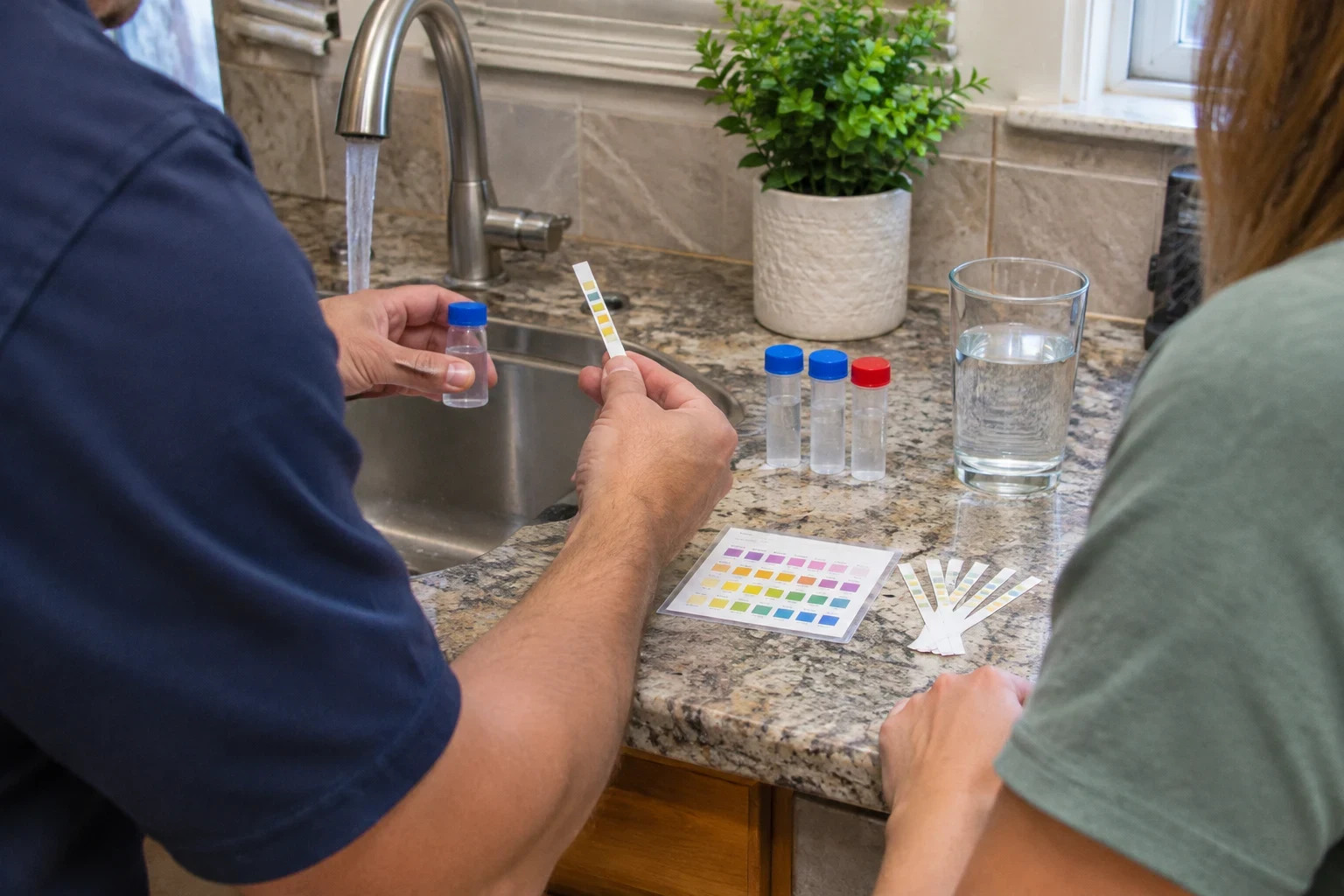
Good treatment starts with knowing your water. We take readings right at your faucet, arrange independent lab analysis for anything a sink-side check cannot settle, and go through each result with you, so any filter or softener you choose is matched to real figures rather than a guess.
Why testing comes before any equipment
Water problems usually announce themselves in small ways. Maybe the shower smells faintly of a swimming pool, the faucets wear a chalky white crust, the toilet bowl has an orange ring or the morning coffee tastes of metal. These clues come from separate sources and need separate remedies, and a test shows us which one is actually at work in your home.
Testing also keeps running costs sensible. A softener installed where the water is already soft burns through salt and flush water every week for no gain. A filter that is too small for the load clogs early and asks for new cartridges sooner than it should. Equipment chosen to fit the water runs efficiently, and your water heater stays clear of the mineral layer that forces it to burn more energy.
Some visits end with good news: your water already suits what you want. When that is the case, you will hear it from us plainly.
What we check during a visit
Hardness in grains per gallon
Calcium and magnesium are read as grains per gallon. That single figure tells us whether a softener would earn its keep or whether filtration by itself is enough.
Disinfectant residual
Utility water carries a disinfectant all the way to your tap, which keeps it safe but can leave a taste or smell. Measuring the level shows how much work a carbon filter would be asked to do.
Iron, pH and total dissolved solids
Iron accounts for orange staining. pH shows whether the water could be corrosive to copper lines and fixtures. Dissolved solids give an overall mineral snapshot and help us size reverse osmosis correctly if you are considering it.
Independent lab analysis
Certain concerns need more than a sink-side reading. For lead from aging plumbing, bacteria in a private well or another specific worry, we draw samples in the proper containers and send them to an outside laboratory.
Results explained in plain terms
We go over every number with you: what falls in the normal range, what deserves an eye on it and what, if anything, calls for treatment. A copy of the results stays with you.
When your water is worth testing
- Chalky film on fixtures
- A white residue on showerheads, glass shower doors and aerators usually comes from minerals. Measuring hardness shows how much is there and whether it is enough to shorten the working life of your water heater.
- A pool-like smell
- If you notice a chemical odor at the faucet or in a hot shower, the disinfectant residual is the usual suspect. A reading confirms it before you spend money on a filter.
- Orange or brown staining
- Discoloration in sinks, tubs and laundry suggests iron. The amount matters, since iron can clog equipment that was never selected with it in mind.
- Original pipes or older solder
- Older plumbing can add lead between the street and your faucet. An independent lab test settles the question for the water you pour into glasses and cooking pots.
- Water from your own well
- No utility monitors a private well. Checking for bacteria, iron and the sulfur behind a rotten-egg odor is the only reliable way to learn what the well is delivering.
- A system quote with no test behind it
- If someone has proposed equipment without measuring your water first, an independent result is worth having before you agree to anything.
How a testing visit runs
- 1
A short conversation by phone
You tell us what you have noticed and what you hope to improve. That helps us decide which tests to bring and whether lab samples are likely.
- 2
Testing at your tap
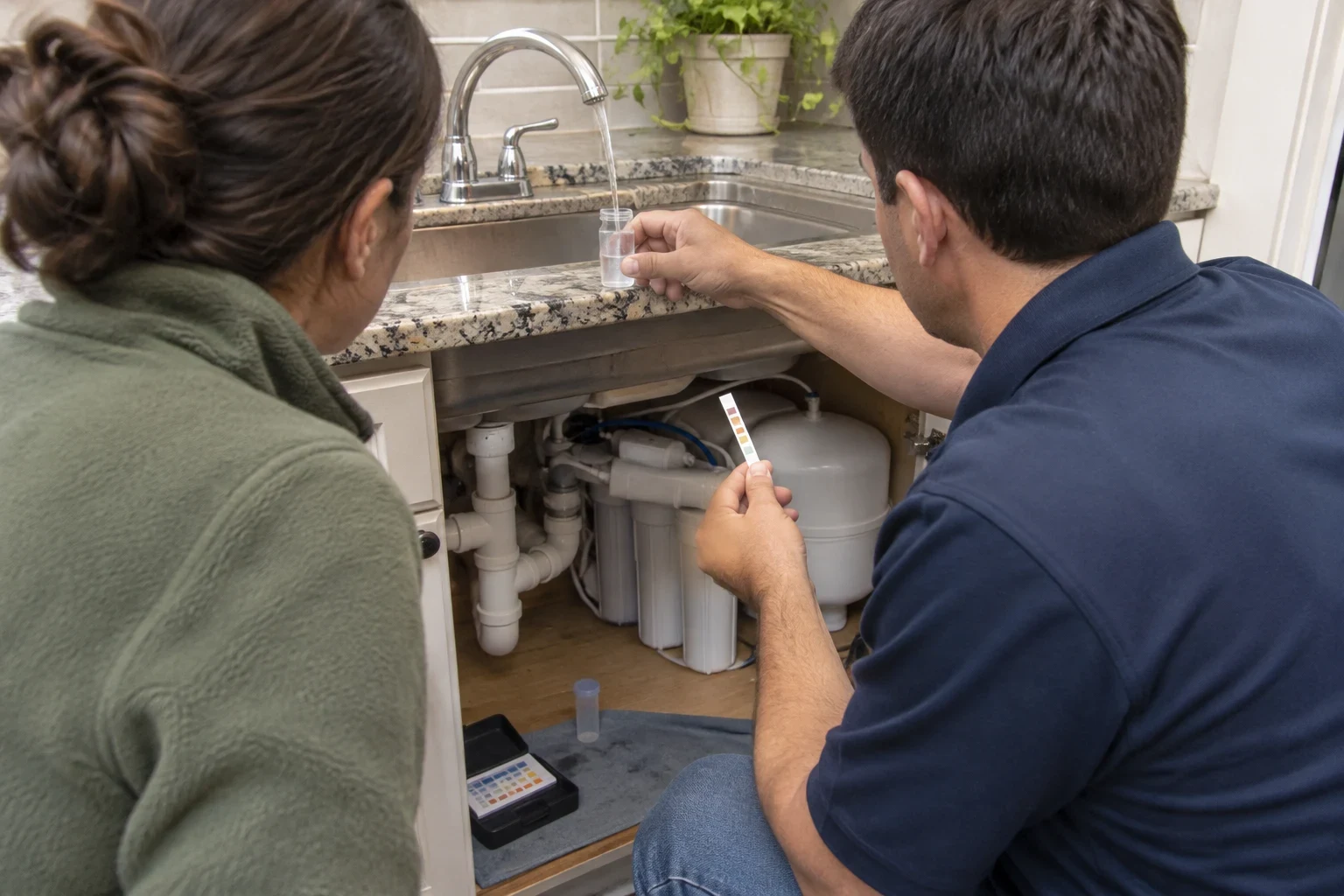
We run water at the kitchen sink and, where it helps, at the point where water enters your home. Readings for hardness, chlorine, iron, pH and dissolved solids take only a short while, and we work tidily around your sink and floors.
- 3
Lab samples if needed
For lead or well water bacteria, we collect samples in the correct containers and send them off. We follow up with you once the results come back.
- 4
Results and options
We explain what the numbers mean and, only if treatment would help, which approach fits: whole-home filtration, a water softener, reverse osmosis at the sink or well water treatment. If a system is the right call, it comes with free installation and full services after the sale.
What shapes the price of a test
Readings taken at your sink and a full laboratory panel involve very different amounts of work, so the cost follows what you want to find out. On the phone we talk through the choices and suggest only the tests that speak to your concern.
- Tap readings versus lab work
- On-site readings handle the everyday questions about taste, staining and scale. Sending samples out for lead, bacteria or a specific contaminant costs more because a laboratory performs the analysis.
- Utility supply or a private well
- A well generally needs a wider panel, bacteria included, because nobody else is checking that water on your behalf.
- How many places we sample
- One reading at the kitchen faucet is quick. Comparing the main entry point, a filtered tap and a fixture on older pipe takes more time and more materials.
- A follow-up check
- Some homeowners like a second test after a new system goes in, to confirm it is doing its job. If that interests you, we can build it into the plan at the outset.
Common questions about water testing
- The city already treats my water. What would a test add?
- Municipal treatment is designed to make water safe at the plant and in the mains. It cannot account for the pipes inside your walls or for how you like your water to taste. Hardness, disinfectant residual and anything your own plumbing adds are only measurable at your faucet, which is where we test.
- Are you going to push equipment once the results are in?
- You get the numbers first, then our read on them. When your water already suits what you want, that is the answer you will hear from us. If we do suggest treatment, we show you which result led to it so you can weigh it yourself.
- How much time should I set aside?
- The on-site readings and our conversation about them fit into one unhurried visit. Anything sent to a lab takes longer to come back, and we get in touch to explain those results once they arrive.
- Is a lead test worth it for my home?
- It is a sensible choice when your plumbing is older, uses older solder or includes fixtures you are not sure about. A lab result settles the matter for your drinking and cooking water. With newer plumbing the risk is lower, and if we think the test is not needed, we will say so.
- We draw water from our own well. When should we have it checked?
- Plan on a check every twelve months as your baseline. Schedule one sooner if floodwater has reached the wellhead, if the pump or casing has been worked on, or if the water starts to look, smell or taste different. For homes around Pasadena, think of each result as a picture of the well at that moment, not a verdict that holds for good.
Find out what is coming out of your tap
Describe what you have been seeing, smelling or tasting, and we will work out which tests suit your home. You will finish with real numbers in hand and an honest view of whether anything needs treating.